
Inside an apartment
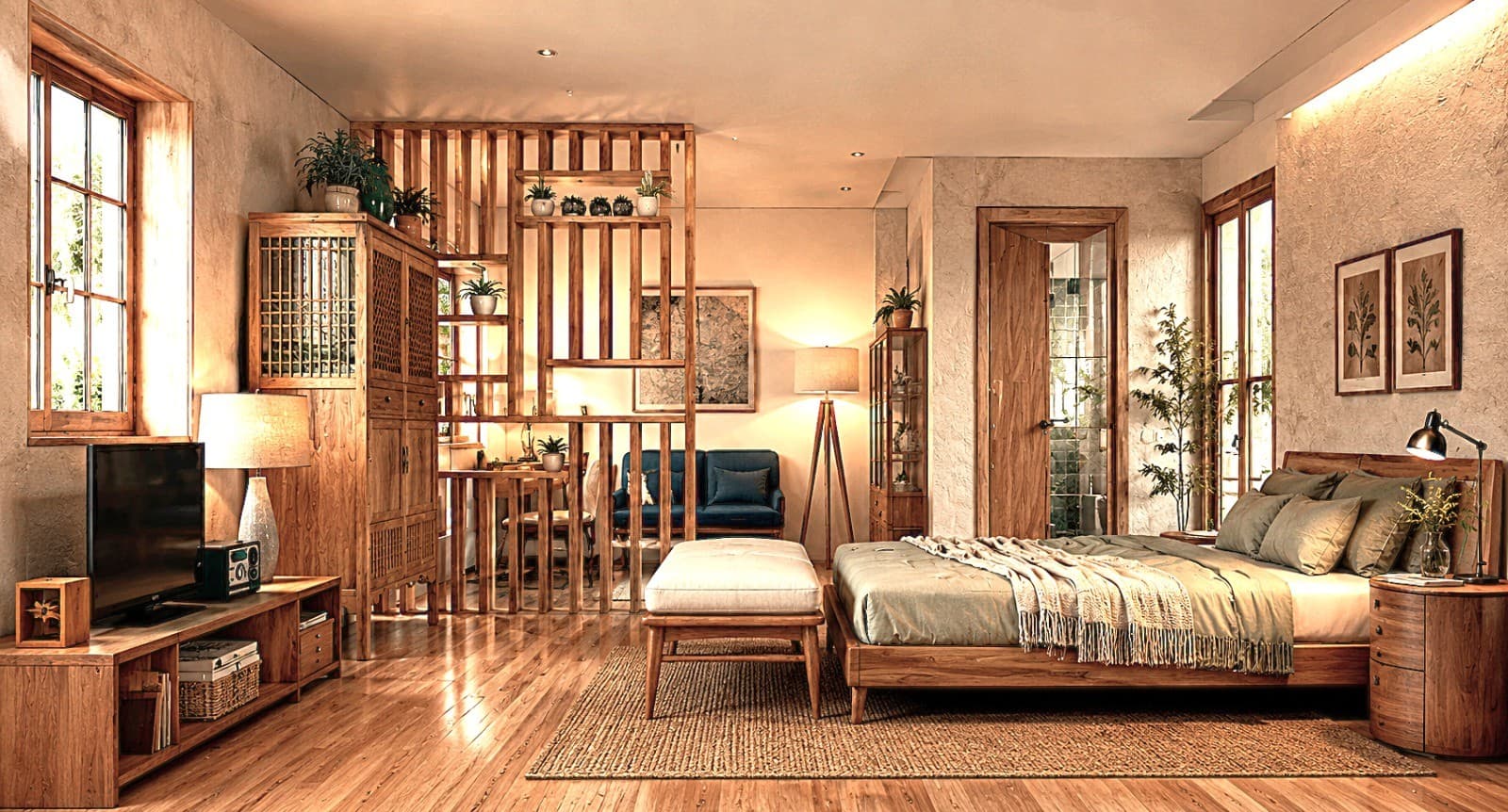
Wood floors, natural materials and plenty of daylight. Every apartment is fully furnished, with a double bed, storage, a sitting area and a TV.
- One bedroom
- Private bathroom
- Private kitchen
- Fully furnished
Opening date to be announced
Furnished, serviced apartments for people moving to Portugal on a D7 visa, offered as a five-year package. In the village of Silva Escura in central Portugal, forty minutes from the beaches of Aveiro and an hour and a quarter from Porto airport.
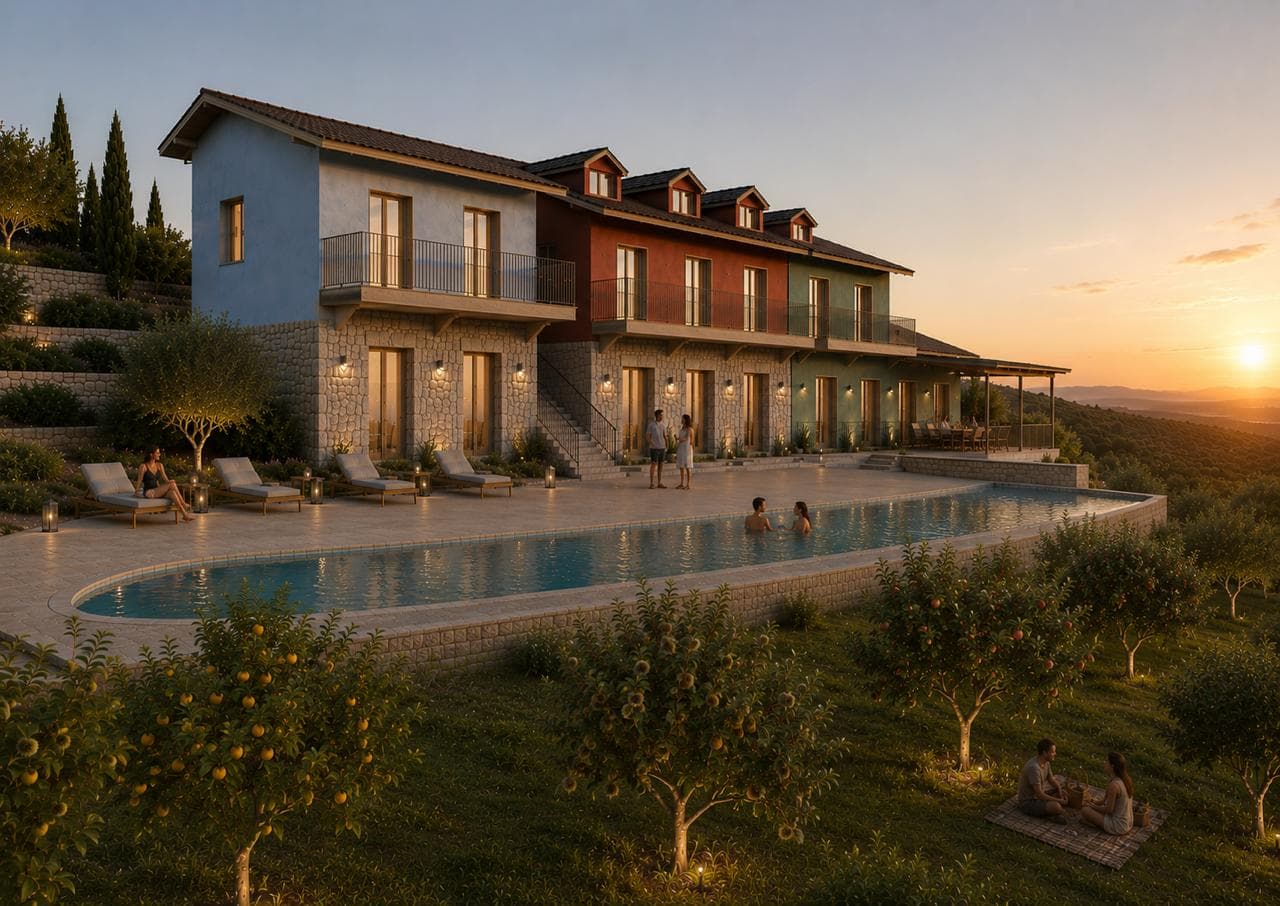
The Senses Corner is a new building of serviced apartments on the edge of Silva Escura, a quiet village in the green hills of central Portugal. It is made for people moving to Portugal on the D7 visa, often retirees, who want to live here rather than visit: our main offer is a five-year package.
Each apartment has one bedroom, its own bathroom and its own kitchen. It comes furnished and looked after, so you can settle in without setting up a household. There is also a large shared common area for cooking and eating together, and the building faces west over the valley, with a shared pool and terraces.
If you would like to stay for a shorter period, we are happy to talk it through. Please get in touch.
Questions in the meantime? Contact us.
Wood floors, natural materials and plenty of daylight. Every apartment is fully furnished, with a double bed, storage, a sitting area and a TV.
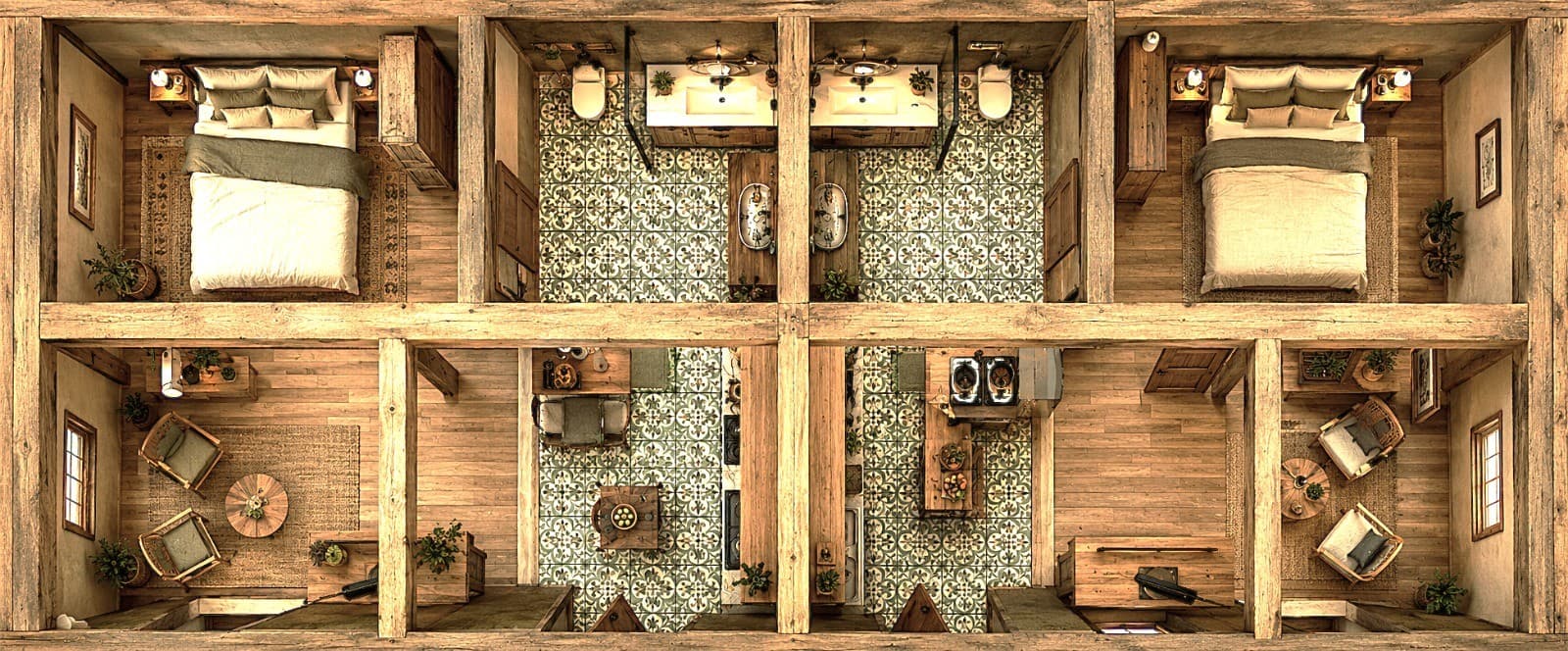
Seen from above: two neighbouring apartments, mirror images of each other. Each has a bedroom, a bathroom with a shower and toilet, a kitchen with a small dining table, and a sitting room.
A large open space shared by everyone in the building: a big kitchen with an island, a long dining table, and a lounge with sofas, opening onto a covered wooden terrace. Somewhere to cook together, share a meal and get to know your neighbours.
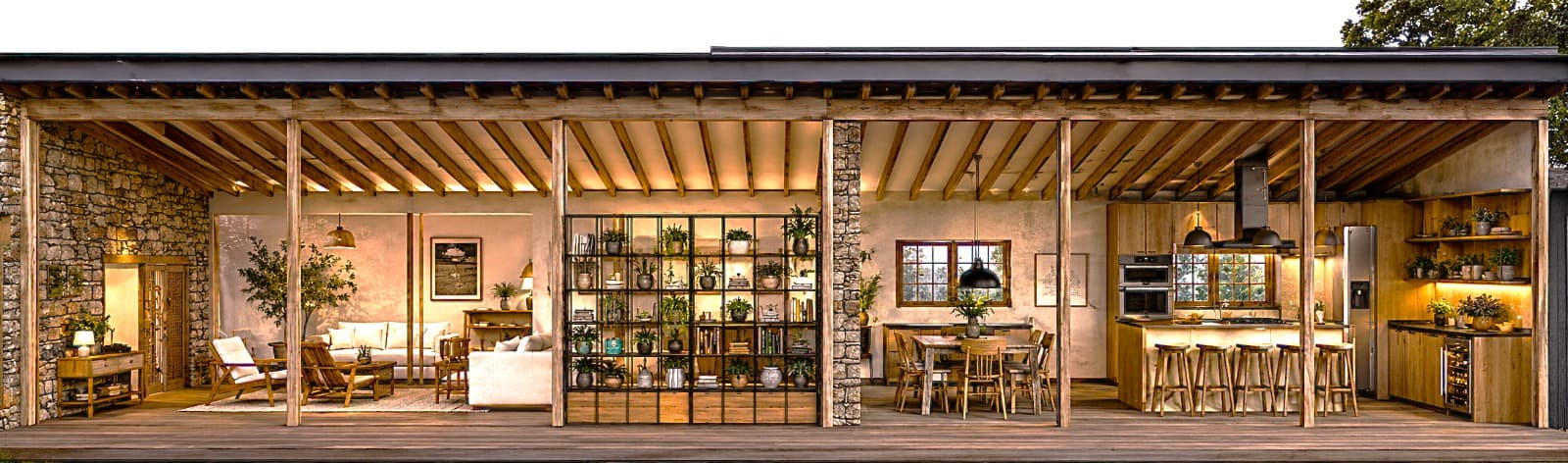
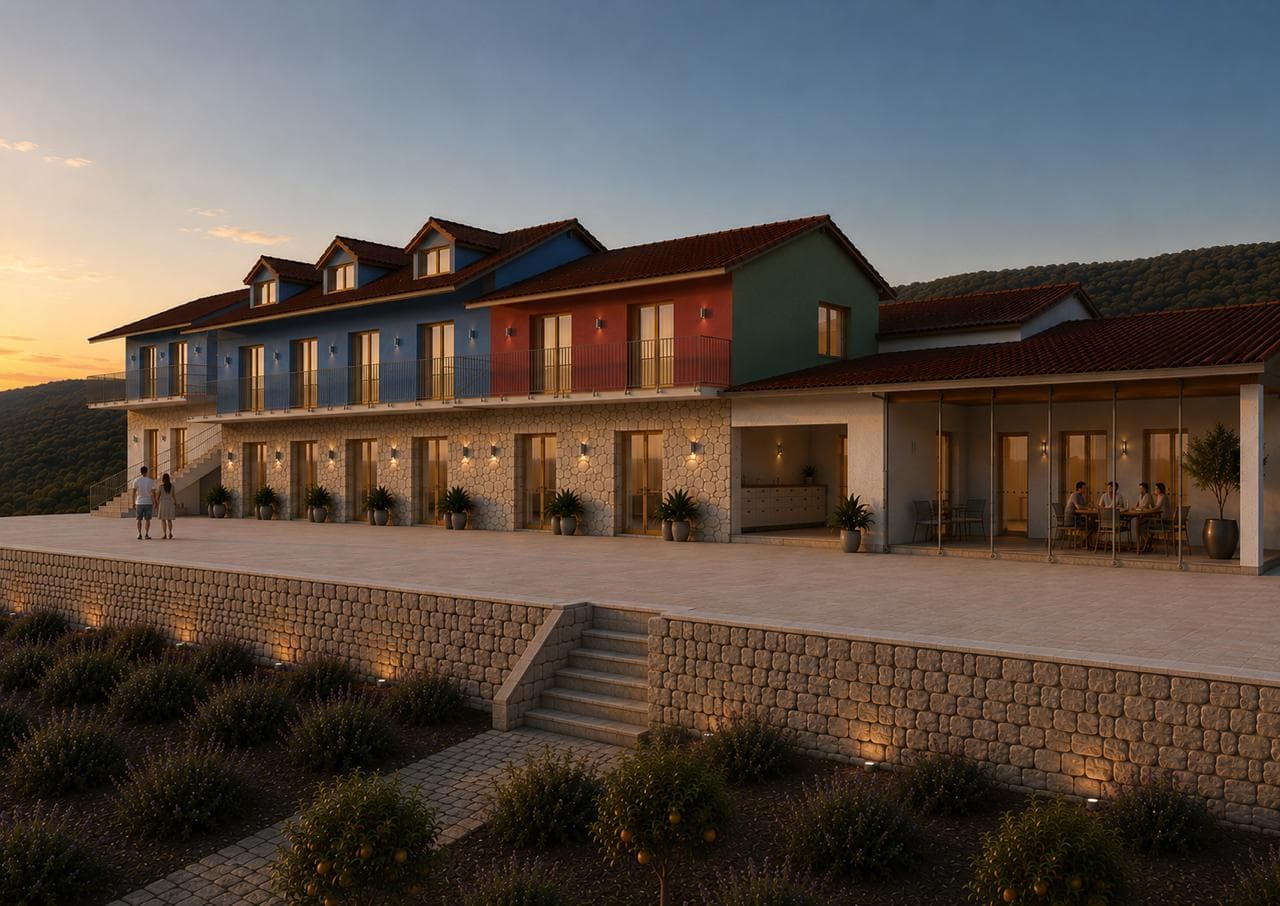
Images of the building and apartments are architectural renders, not photographs.
The D7 is Portugal’s residence visa for people who live on passive income, such as a pension, Social Security, rental income or investments. It is the visa most American retirees use to move to Portugal, and it is the visa our apartments are designed around.
Here is how it works, in plain terms. This is general information, not legal advice: requirements change, so always confirm with the Portuguese consulate before you apply.
Get a NIF and a Portuguese bank account
Both can be arranged from the US, usually through a lawyer or a fiscal representative.
Gather your documents
Allow time for the FBI background check and apostilles; some documents must be recent when you apply.
Apply in the US
You apply through the Portuguese consulate that serves your state, usually via a VFS Global centre. You cannot apply from inside Portugal.
Receive the visa
A decision usually takes around 60 days. The visa is valid for four months and lets you travel to Portugal.
Attend your AIMA appointment in Portugal
AIMA is Portugal’s immigration agency. At the appointment they take your fingerprints and photo for your residence card.
Receive your residence card
The card is posted to your Portuguese address. Overall, the process typically takes six to nine months from application.
Check the official sources before you apply:
Many people use a Portuguese immigration lawyer to handle the NIF, bank account and application. The figures above are for 2026.
Click any photo to see it larger.
A village in green hills, 40 minutes from the sea. Tap any line marked + to read more.
The village
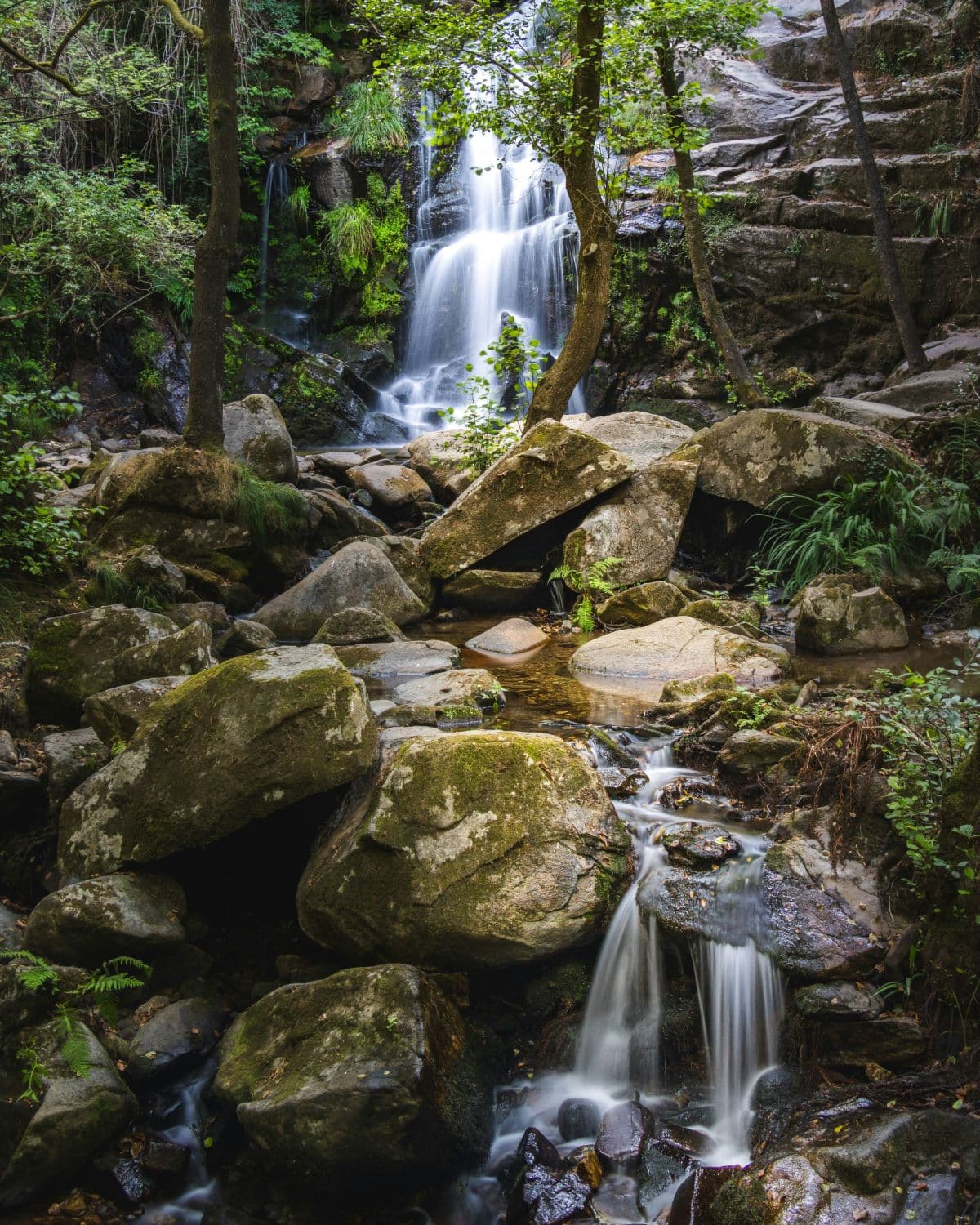
Silva Escura means “dark wood”, and the name still fits: a granite village in pine, oak and chestnut on the hills above the Vouga river. The parish church of São João Baptista sits at its centre, and a short walk downhill the Rio Mau drops twenty-five metres into the pool at Cabreia.
Since 2013 Silva Escura has shared a parish council with neighbouring Dornelas, one of the nine parishes of Sever do Vouga. The parish office stands by the church, and the marked walk down to the Cabreia waterfall starts from there.
The village counted around 1,400 residents at the 2021 census, close to 2,000 together with Dornelas. It is a scatter of granite hamlets, small farms and vegetable plots rather than a town; cafés, shops and the market are five minutes away in Sever do Vouga.
The Vouga river rises in the Serra da Lapa and runs about 150 km west to the sea at Aveiro. Below Sever do Vouga it winds through a deep, wooded valley, with river beaches such as Quinta do Barco for swimming in summer.
The municipality
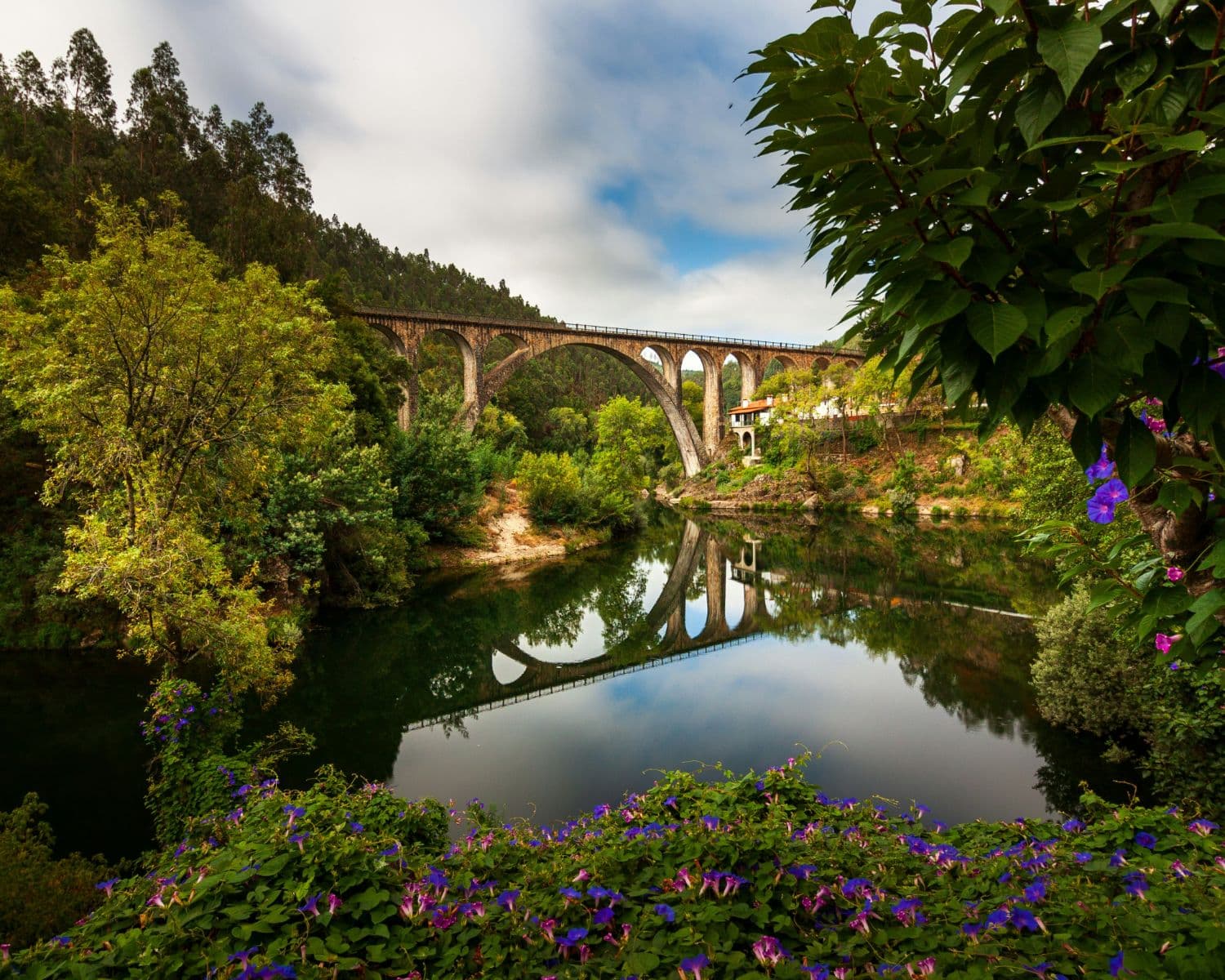
A small, green municipality strung along the Vouga river valley, and Portugal’s blueberry capital: the first plants came here in 1990, and the Feira Nacional do Mirtilo fills the town park every June. The old Vouga railway now runs through it as the Ecopista, a walking and cycling path over stone bridges and past old stations.
Blueberries were first planted here in 1990 and are now the backbone of the local economy: around 180 growers, many of them small family farms, work more than 150 hectares and pick upwards of 150 tonnes a year. With the Alentejo, this is one of Portugal’s two main growing regions. The Feira Nacional do Mirtilo, held since 2008, fills the town park for a weekend in late June with fresh fruit, jams, liqueurs, tarts and ice cream, alongside music and local food.
The narrow-gauge Vouga railway has been turned into a walking and cycling path along its old route. From Sernada do Vouga it climbs upriver through Sever do Vouga for about 70 km, and the full Ecopista now runs some 120 km towards Viseu and Santa Comba Dão. It is gentle, almost traffic-free, and passes restored stations such as Paradela and Cedrim and the tall stone bridge at Poço de Santiago.
The hills drain into the Vouga river through steep side valleys, so there is falling water everywhere. Cabreia, at the edge of Silva Escura, is the best known; the Gresso walkways pass a chain of smaller falls. In summer, river beaches such as Quinta do Barco have lawns, cafés and calm water for swimming.
The coast
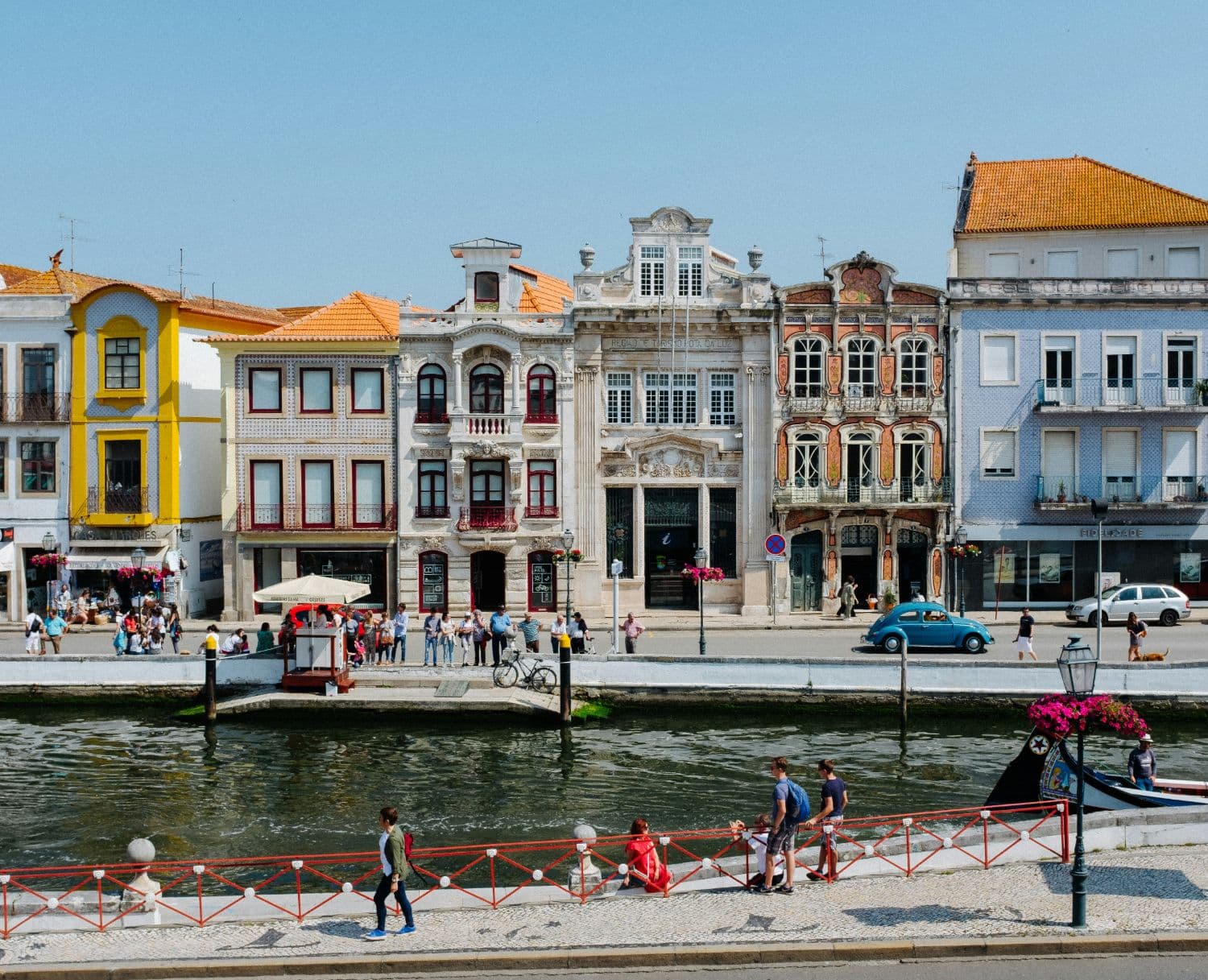
Forty minutes west the hills give way to the Ria de Aveiro, a lagoon some 45 km long behind a strip of dunes. Aveiro is built on its canals, worked by painted moliceiro boats, with Art Nouveau façades, a convent museum and ovos moles, the town’s egg-yolk sweet in wafer shells.
Aveiro’s canals were dug to bring salt, seaweed and fish into the town from the lagoon. The moliceiros, long boats with high, painted prows, were built to gather moliço, the seaweed once used as fertiliser. Today they take visitors on 45-minute trips from the Rossio.
Salt has been made on the Ria since at least the tenth century, and was once the town’s fortune. Most of the pans have gone, but a few are still worked by hand in summer, including the Troncalhada eco-museum near the centre, where you can walk out between the pans.
A long strip of dunes divides the Ria from the ocean, with beach along its whole length: Barra under the lighthouse, Costa Nova with its striped houses, Vagueira to the south, Torreira and São Jacinto to the north. Wide sand, cold Atlantic water and good surf, 45 minutes to an hour from the house.
The lagoon and coast around Aveiro: canals, salt pans, beaches and dunes.
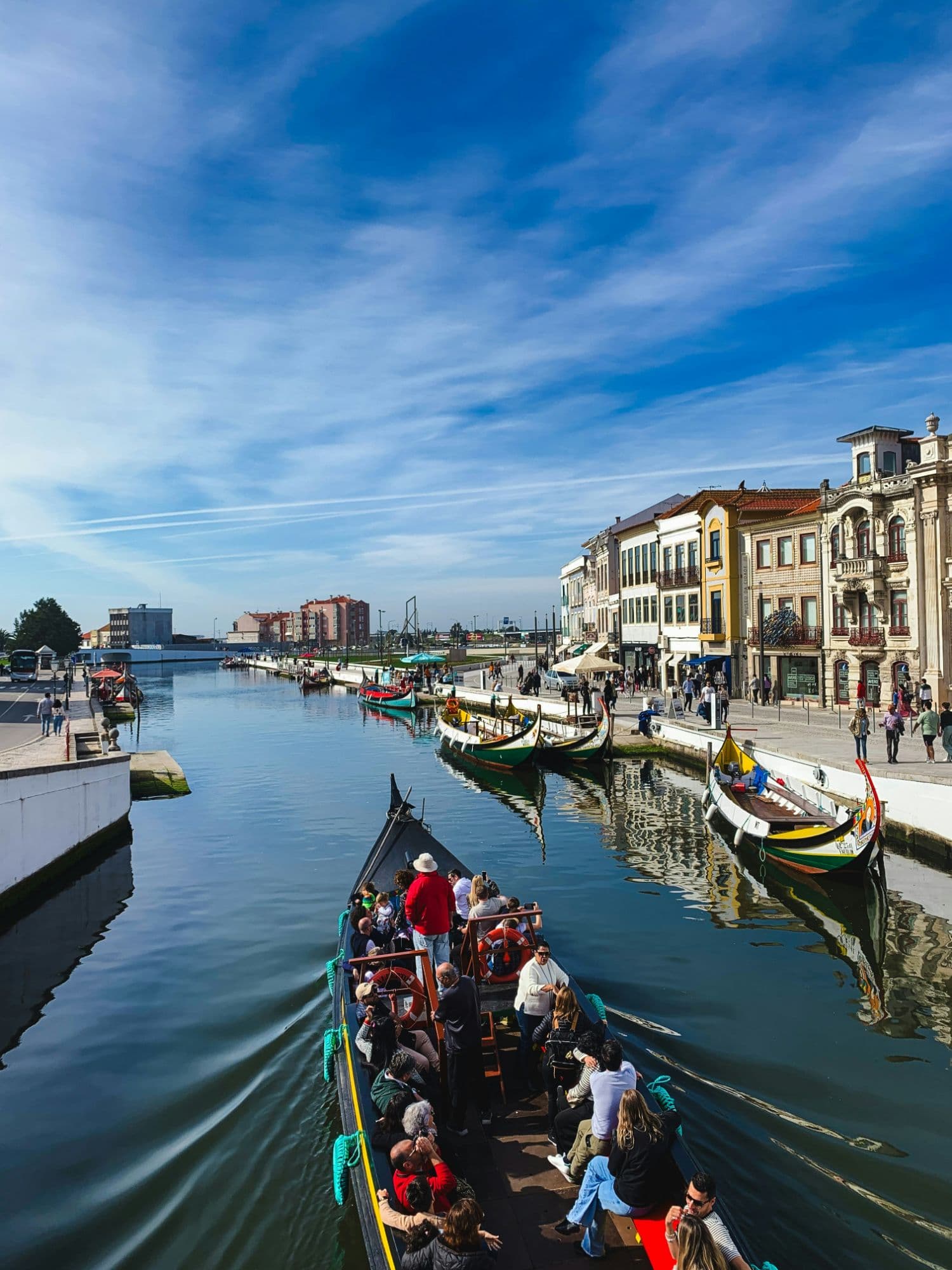
Aveiro’s central canal and its branches cut through the old town. Moliceiros, once used to gather seaweed, now take you round in about 45 minutes, under bridges and past the Art Nouveau fronts of the Rossio.
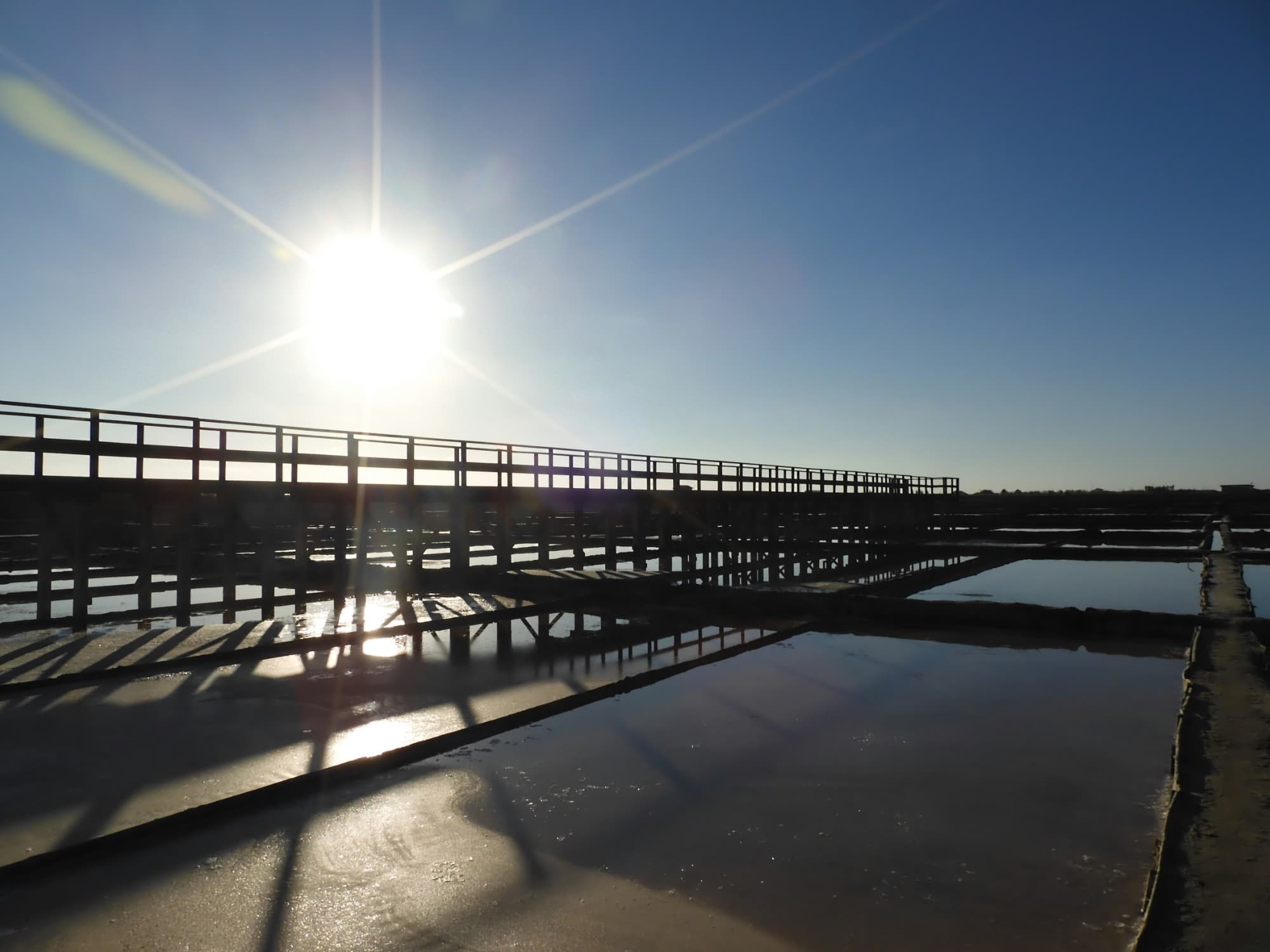
Salt has been raked from the Ria for centuries. At the Troncalhada salt pan, an eco-museum a short walk from the centre, you can see it still worked by hand in summer and walk out between the pans.
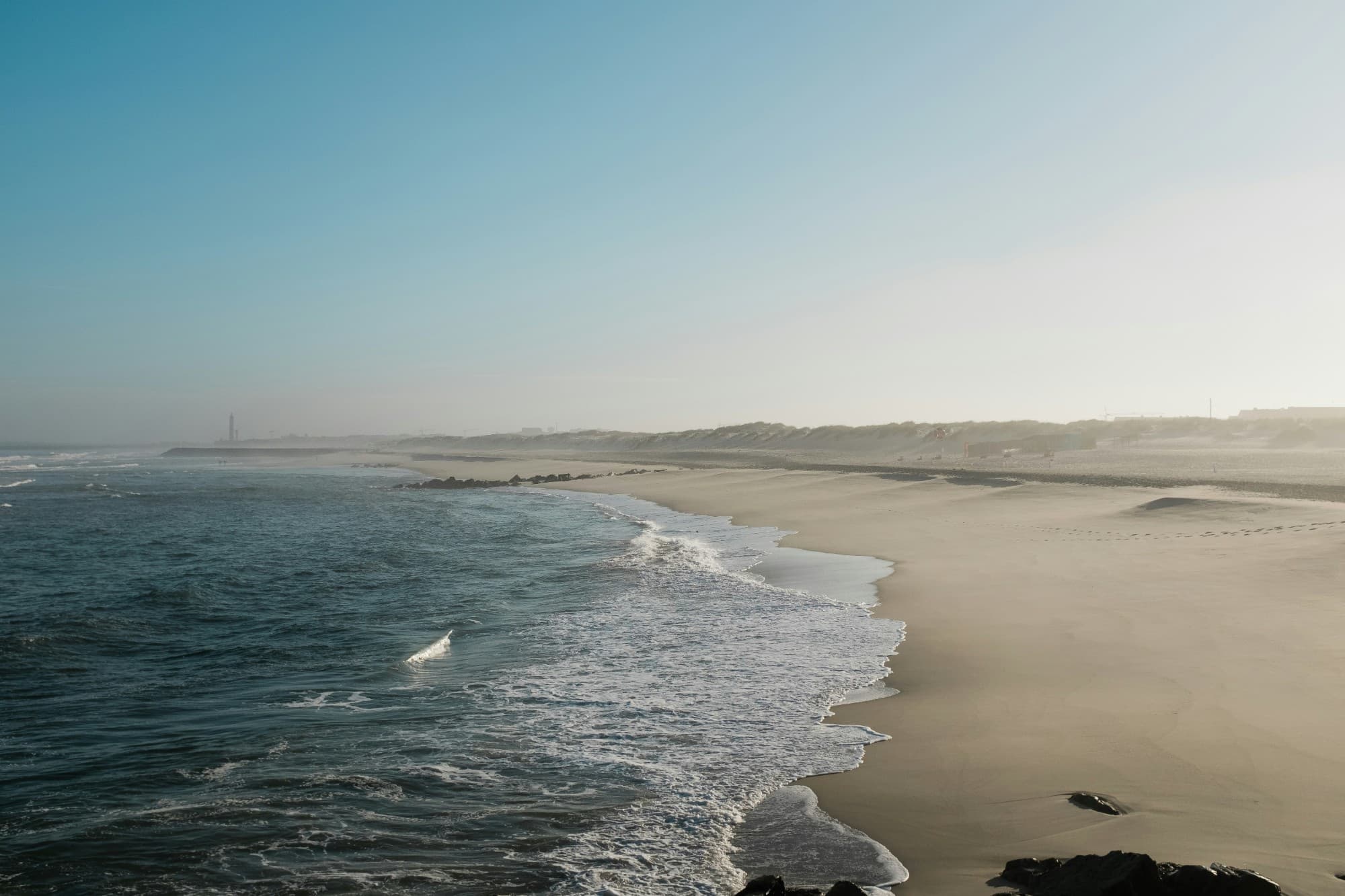
Barra, under Portugal’s tallest lighthouse; Costa Nova, with its candy-striped palheiros; and further south Vagueira. Wide Atlantic sand, cold water and good surf.
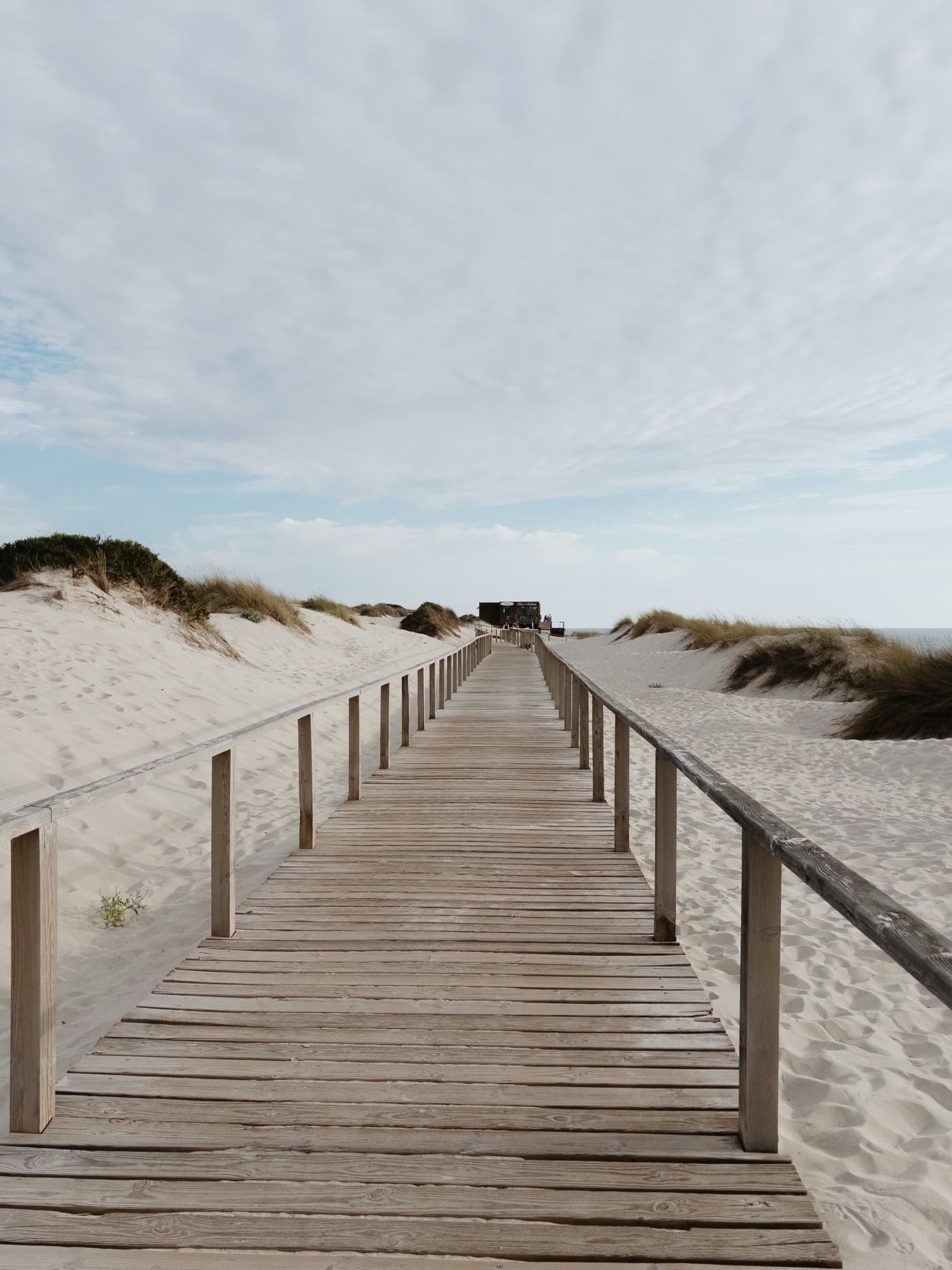
Across the mouth of the Ria, the São Jacinto Dunes Nature Reserve keeps 700 hectares of wild dune and pine between lagoon and sea, with boardwalk trails. A ferry crosses from Forte da Barra.
Driving times and distances from Silva Escura. For flights from the US, see Practical information.
| To | By car | Distance |
|---|---|---|
| Aveiro | 40 min | 43 km (27 miles) |
| Porto airport | 1 hr 15 min | 80 km (50 miles) |
| Porto city | 1 hr | 62 km (39 miles) |
| Coimbra | 1 hr 10 min | 88 km (55 miles) |
| Lisbon | 3 hr 15 min | 280 km (174 miles) |
Times are from the centre of Silva Escura and rounded. Walking times are shown where the walk is a reasonable one.
Silva Escura
The Rio Mau falls about 25 metres into a cold, clear pool, with a picnic park and shaded paths alongside.
Pessegueiro do Vouga
A tall stone railway bridge of 1913 striding across the Vouga river, now part of the Ecopista and the best view in the valley.
Aveiro
Boat trips on painted moliceiros through the city’s canals, starting by the Rossio and the old fish market.
Silva Escura
The Rio Mau falls about 25 metres into a cold, clear pool, with a picnic park and shaded paths alongside.
Sever do Vouga
Ruins of the lead and silver mines that worked these hills from the 1830s to 1970, now a park on a marked trail from Cabreia.
Sever do Vouga
Cafés, the market, the town park where the blueberry fair runs in June, and the municipal museum.
Pessegueiro do Vouga
A quiet beach on the Vouga river with lawns, a café and calm water for swimming in summer.
Paradela
An old station on the Vouga line, restored as a stop on the Ecopista: walk or cycle the former railway along the river.
Pessegueiro do Vouga
A tall stone railway bridge of 1913 striding across the Vouga river, now part of the Ecopista and the best view in the valley.
Rocas do Vouga
Wooden walkways along the Gresso past a string of small waterfalls. An easy walk of about 2 km there and back.
Águeda
The old railway junction where the Ecopista begins. On summer weekends the historic Vouga train runs between Aveiro and nearby Macinhata.
Águeda
Known for the Umbrella Sky Project, when the old streets are roofed with coloured umbrellas each summer.
Aveiro
Boat trips on painted moliceiros through the city’s canals, starting by the Rossio and the old fish market.
Aveiro
A working salt pan run as an eco-museum. Walk between the pans and watch the salt raked in summer.
Aveiro
The convent of Princess Saint Joana, with a gilded Baroque church and her marble tomb.
Aveiro
Aveiro’s Art Nouveau trail starts here, in one of its finest houses, with a tea house in the courtyard.
Ílhavo
The story of Portugal’s cod fishing fleets, with an aquarium of live cod.
Ílhavo
Porcelain made here since 1824: the factory museum, a chapel, and the factory shop.
Águeda
One of the largest natural lagoons on the Iberian peninsula, good for birdwatching, kayaks and a lakeside walk.
Ílhavo
A long Atlantic beach under the Farol da Barra, at 62 metres the tallest lighthouse in Portugal.
Ílhavo
The striped wooden palheiros along the lagoon front, a wide beach on the ocean side and fish restaurants between them.
Vagos
A broad, quieter beach to the south, popular with surfers.
Murtosa
A fishing village between ocean and Ria, with moliceiros moored on the lagoon side.
Aveiro
Wild dunes and pine forest with boardwalk trails and birdlife. Drive round via Torreira, or take the ferry from Forte da Barra.
Serra da Freita, Arouca
Around 75 metres high, one of the tallest waterfalls in mainland Portugal, in the Arouca Geopark.
Areinho, Arouca
About 8 km of boardwalk along the Paiva gorge. Book tickets ahead, and start at Areinho to walk downhill.
Alvarenga, Arouca
A 516-metre pedestrian suspension bridge slung 175 metres above the Paiva. Booked with the walkways.
Answers to the questions people ask before moving to Portugal for a few years.
The apartments are not open yet. If you would like to hear about the five-year package when details are ready, want to ask about a shorter stay, or have any other question, please write to us.